
Energy Security vs. Energy Transition: The Industry’s False Trade-Off
Deployment is the inflection point — and it is where the industry has consistently fallen short.
Scale continues to be confused with size. It is still measured by the ambition of projects, the capital deployed, and the infrastructure proposed. But that is not how energy systems scale in reality. Scale comes from speed, from repeatability, and from proximity to demand. It comes from the ability to deploy consistently — not from the ability to announce.
This is precisely where modular, decentralised hydrogen begins to outcompete traditional models. Not because it is more ambitious, but because it is executable.
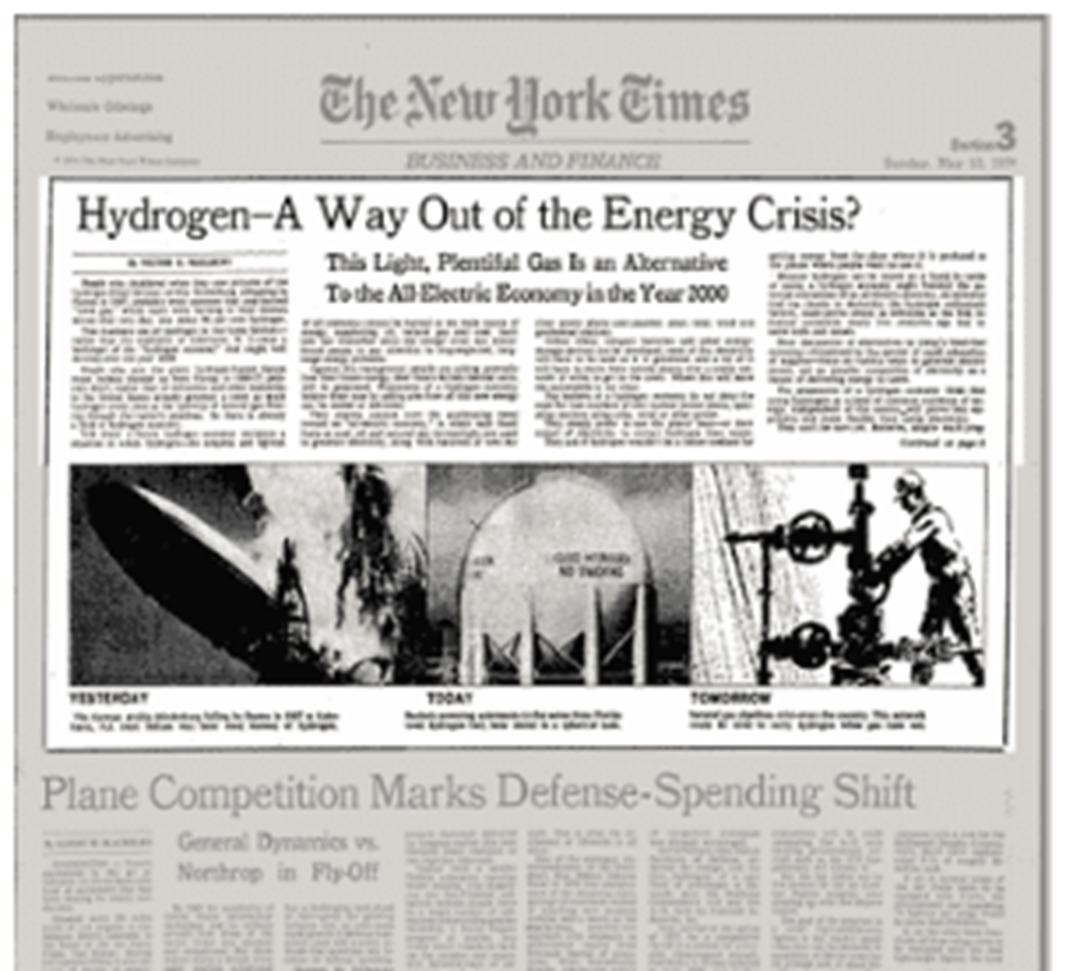
For an industry long positioned as the future of energy, hydrogen has made remarkably limited progress in terms of real-world adoption. As early as 1976 — on the front page of the New York Times — it was presented as a solution to the energy crisis. Nearly fifty years later, the narrative remains largely unchanged.
This is not a technology problem. It is an execution problem.
The industry continues to frame energy security and energy transition as parallel objectives, when in reality they operate on entirely different timelines. Energy security is immediate. The energy transition has been structured as a future-state exercise.
Energy systems do not wait.
What has been missing is alignment — grounded in a disciplined understanding of how energy is actually used at the point of demand.
Hydrogen has not stalled because of innovation. It has stalled because of its environment.
Political cycles reset direction. Capital flows without delivery accountability. And critically, there is a widening execution gap.
Hydrogen does not exist in isolation. It sits across power systems, gas handling, industrial processes, and mobility. Without operational depth, integration becomes theoretical — and deployment does not follow.
The consequence is an industry that has designed a hydrogen economy without delivering one.
At the core of this failure is the absence of rigorous energy modelling.
At ESSNA™, this is addressed through EMAP™ — the Energy Modelling and Application Platform.
EMAP™ establishes where hydrogen fits, what it displaces, how it performs, and what it costs — before deployment. It connects policy intent with engineering design and operational reality.
Without this, hydrogen remains a concept. With it, it becomes deployable.
At ESSNA™, through 59Hydrogen™, hydrogen is treated as a deployment problem, not a development exercise.
Systems are deployed on a no-CAPEX basis. Hydrogen is generated on site. Deployment timelines are measured in months, not years. Integration occurs within existing systems.
Through AEMS™, performance is continuously optimised — creating a closed loop of model, deploy, optimise, and scale.
This is not a future-state vision.
It is an operational model.
The next phase of the hydrogen market will not be defined by the size of projects or the strength of narratives.
It will be defined by those who can deploy — repeatedly, economically, and at speed.
Hydrogen does not need more discussion.
It needs to be understood, modelled — and then delivered.