
What Actually Determines the Cost of Hydrogen? 7 Factors Every Buyer Should Understand
When someone asks, "How much does hydrogen cost?" the honest answer is simple: it depends.
Unlike diesel or natural gas, hydrogen pricing is influenced by much more than the production process itself. Two organizations purchasing the same quantity of hydrogen can pay significantly different prices depending on how it is produced, delivered, stored, and ultimately used.
If you're evaluating hydrogen for your fleet, facility, or industrial operation, understanding the factors behind the price is essential. Here are the seven factors every buyer should know.
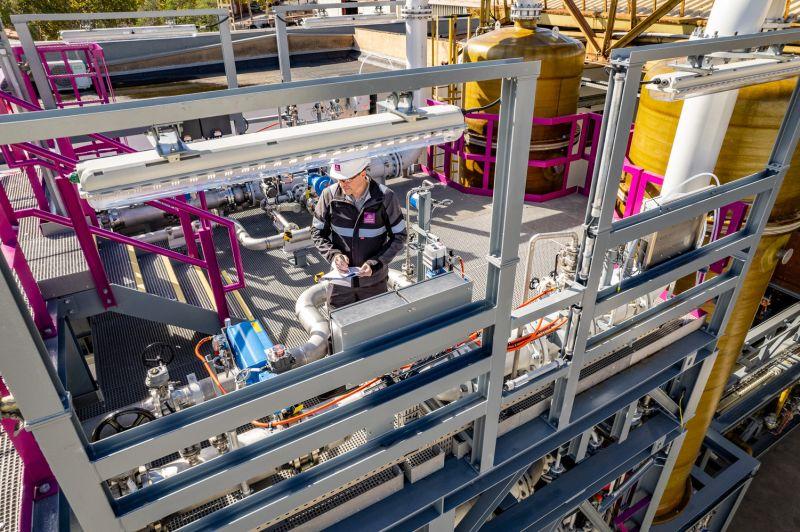
1. How the Hydrogen Is Produced
The production method is the starting point for hydrogen economics.
Hydrogen can be produced through water electrolysis, steam methane reforming (SMR), or other production pathways. Each method has unique capital costs, energy requirements, carbon intensity, and operating expenses.
While one production method may have a lower manufacturing cost, it does not necessarily result in the lowest delivered cost.
2. Electricity or Feedstock Costs
Energy is one of the largest contributors to hydrogen pricing.
For electrolyzers, electricity is typically the largest operating expense. Lower electricity rates and higher equipment utilization generally reduce the cost per kilogram.
For SMR systems, natural gas pricing becomes the primary cost driver.
Changes in energy markets can have a significant impact on the final price of hydrogen.
3. System Utilization
Hydrogen production systems perform best when they operate consistently.
Facilities producing hydrogen close to their designed capacity spread fixed operating costs across more kilograms of hydrogen, lowering the cost per unit.
Oversizing a system that runs only occasionally often increases the effective production cost. Matching production capacity to actual demand is usually more important than simply installing the largest available system.
4. Transportation and Delivery
Moving hydrogen is often one of the most expensive parts of the supply chain.
Depending on the application, hydrogen may be transported as compressed gas or liquefied for shipping. Liquid hydrogen requires significant energy to produce and, upon delivery, is typically vaporized back into its gaseous state before dispensing or end use.
Transportation, storage, vaporization, compression, and specialized handling all contribute to the delivered cost.
As delivery distances increase, logistics can become one of the largest components of the final price per kilogram.
This is one reason many organizations are evaluating on-site hydrogen generation, where hydrogen is produced exactly where it is needed, eliminating much of the transportation cost and supply-chain complexity.
5. Storage and Dispensing Requirements
Producing hydrogen is only one part of the overall cost equation.
Compression systems, high-pressure storage vessels, cooling equipment, dispensing infrastructure, maintenance, and ongoing operations all contribute to the total cost of supplying usable hydrogen.
Depending on the application, these downstream systems can represent a significant portion of total project costs.
6. Required Hydrogen Quality
Not every application requires the same level of hydrogen purity.
Different industries have different quality requirements, with fuel-cell vehicles requiring especially stringent purity standards.
Producing hydrogen that meets specifications such as SAE J2719 often requires additional purification, analytical verification of impurities, and continuous quality assurance, all of which increase costs.
7. The Commercial Model
How hydrogen is purchased can be just as important as how it is produced.
Organizations that purchase hydrogen production equipment must also manage capital investment, maintenance, staffing, and operational responsibilities.
Alternatively, service-based models allow customers to pay only for the hydrogen they consume while the provider owns, operates, and maintains the infrastructure.
For many organizations, this approach reduces financial risk while improving overall project economics.
The Bottom Line
The true cost of hydrogen extends far beyond production.
It reflects the entire value chain—from energy input and system utilization to transportation, storage, dispensing, purity requirements, and commercial structure.
Understanding these seven factors enables organizations to compare hydrogen solutions on an equal basis and identify where the greatest long-term value can be achieved.
Rather than focusing solely on the cost per kilogram, buyers should evaluate the total cost of ownership and long-term operational impact.
Ready to Evaluate Your Hydrogen Economics?
Before comparing hydrogen prices, compare what those prices actually include.
ESSNA™ helps organizations evaluate their complete hydrogen economics—from production and delivery to infrastructure and lifecycle costs—to identify the most practical and cost-effective solution for their operations.